The Tune of Reality
Why a technocratic world is becoming metaphysical again — and what consciousness research, AI limits, and Gen-Z spirituality reveal about the next paradigm shift.
By Tanya Teterina
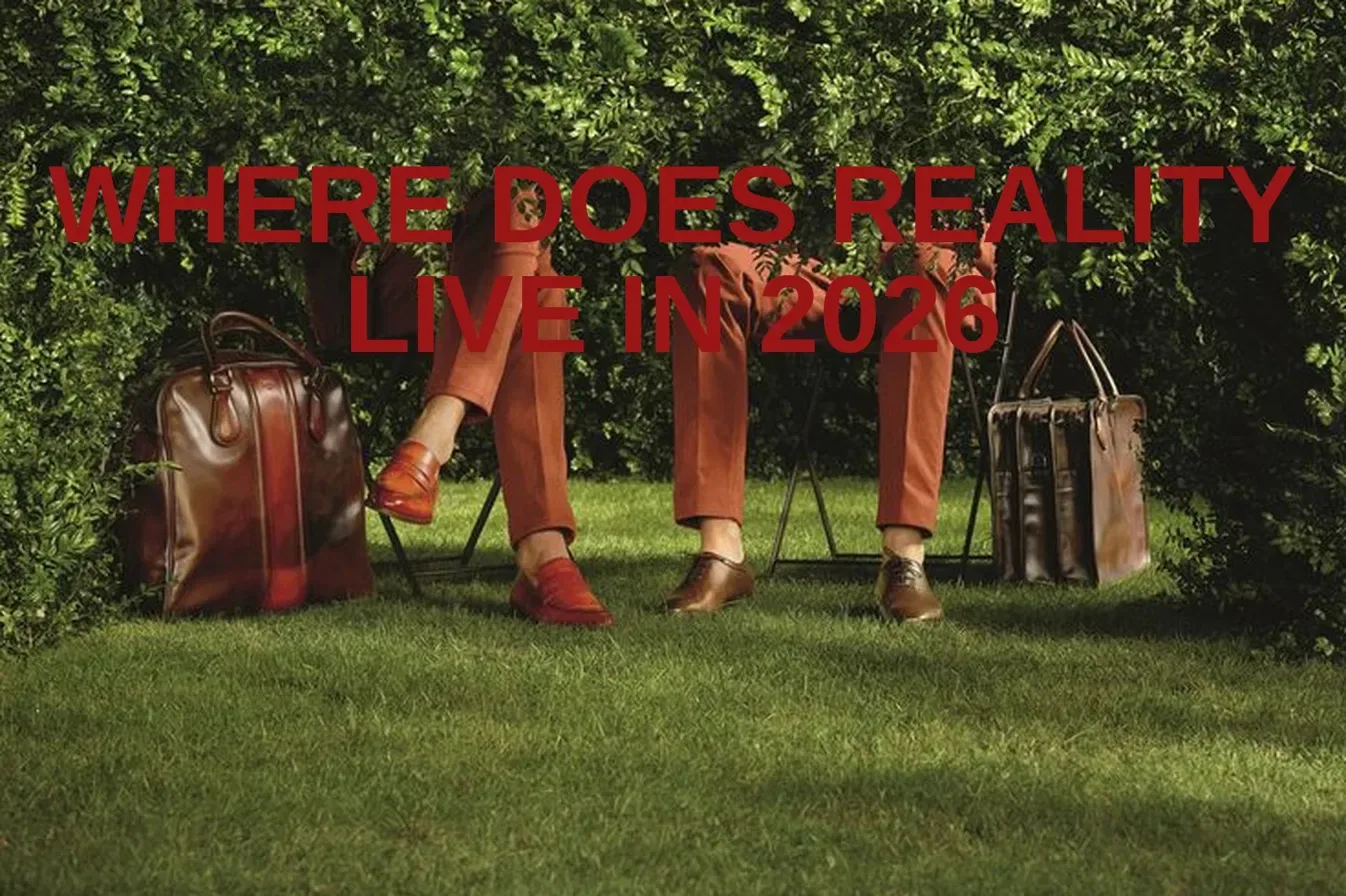
The Push We Needed
Gen Z and Alpha aren’t drifting away from belief, they’re drifting toward something older and stranger: the sense that the world is not passive matter but living presence. Not religion, but aliveness. And that, more than anything, is the tension of our moment.
We live in a world that worships metrics, dashboards, and quarterly OKRs, yet somehow end each year more confused about what consciousness is and why it refuses to behave like something you can pin to a spreadsheet.
We have built a civilization optimized for measurement and then quietly discovered that the thing doing the measuring doesn’t fit inside the model.
A recent cross-study survey from the AAN Symposium found that 42% of neuroscientists now consider consciousness “not fully explainable by brain activity alone.” There is no mysticism, just the discomfort of scientists when the data stops obeying the rules.
And then, I read Christian Wiman’s essay in Harper’s Magazine, “The Tune of Things,” which reopens the question with unsettling clarity: Read the essay →
What if consciousness behaves less like a machine and more like a field?
A suggestion bold enough to irritate both priests and physicists: which usually means the author is onto something.
Why the New Generation Is Quietly Becoming Mystical
If that still sounds too lyrical for a world run by algorithms, look at the people who will inherit that world. They’re already treating this as data.
Pew Research (2024–2025) shows: 63% of Gen Z believe in a higher power or universal consciousness; only 31% still stay inside religion; 54% report a mystical experience — nearly triple Boomers. Pew Research →
Which means the real comeback of our era isn’t faith but doubt, the unsettling suspicion that the world itself might be far more alive than our tools can measure.
And the empirical breadcrumbs keep appearing: forest networks trade nutrients and warnings through fungal links, as shown in recent work on common mycorrhizal networks (Frontiers in Microbiology, 2024); flatworms at Tufts regrow not just tissue but learned behavior; near-death patients recall events during periods of cortical silence (Consciousness and the Dying Brain — PMC).
Each finding alone is curious. Together, they form a pressure system.
The Limits of AI: What Machines Teach Us About Mind
All these biological and near-death anomalies push us toward one simple truth: something in the world is operating differently than we assumed. And right at that moment, AI walks onto the stage.
Because a parallel line of research in 2025 revealed something equally unsettling: machines are beginning to show patterns we never expected, but in the opposite direction.
Earlier this year, a Stanford study on AI legal research tools (Magesh et al., 2025) examined the failure modes of frontier AI models and found that AI fills gaps with invented coherence in much the same way the human brain, under left-hemisphere overreach (McGilchrist, 2022–2024), constructs order where none exists.
In other words: biology and silicon are breaking in the same pattern. That’s no longer coincidence. That’s a symptom.
And just to confuse us further, MIT’s 2025 Cognitive Audit delivered this line:
“AI cannot generate awareness. Only the performance of awareness.”
Meaning: AI can act conscious, but it cannot know that it is. And this leads to the real pivot point. If intelligence can exist without awareness, then awareness is not a by-product of intelligence. It is something else — its own independent factor, possibly a layer of reality itself that we’ve been mistaking for a glitch all along.
A Bridge Between Technoscience and Spirituality
And right when AI exposes the limits of intelligence, another, older fault line reappears, the one we inherited from Descartes. Subject here, object there. Mind on one side, matter on the other. God above, the world below. Logic marching forward while intuition trails behind in silence.
For centuries, this fracture looked like order. Now it reads more like exhaustion. New research keeps knocking, and younger generations keep pointing to a truth the old worldview can no longer carry. Quantum field theory reminds us that nothing exists alone: every particle “borrows” its being from something else. Neuroscience whispers the same about the mind. And AI presents the inverse case: intelligence without awareness — powerful, but strangely hollow.
Connect these dots, and the pattern stops hiding: reality runs on relation. Consciousness is the thread that keeps the whole system intact. And “God”... well:
Let’s define “God” in a way that wouldn’t send a metaphysics-allergic engineer sprinting for the exit. Here, “God” isn’t a cosmic superintendent but an invisible operating system woven through reality, a force that turns raw perception into an inner life.
And this is where the future walks in.
The Brutal Future Check
If consciousness really behaves like a network of relations, then 2026 flips the entire playbook: brands become gravitational forces. Everything a company creates — an interface, a story, a promise — bends the wider system toward itself.
McKinsey’s 2025 report already hinted at it: purpose is economic gravity. Deloitte confirmed the rest: Gen Z buys the feeling of being understood. Which means marketing next year will look dangerously close to metaphysics:
“Here is the world your mind joins when you choose us.”
So the real question every company must confront is painfully simple:
“What are you adding to the world that strengthens connection?”
If the answer is “nothing” or “we don’t know” — prepare to be ignored: quickly, and permanently.
The companies that will matter next year are those that grasp a simple truth: every product, every interface, every sentence is a signal sent into the shared fabric of meaning. Only one kind of signal cuts through the static: coherence. In a world woven from relations, clarity becomes a strategy.
Which is why, when you decorate the tree and make your wish for the year ahead, treat it like strategy: the world only responds to what is stated with precision.
© DADÔMU Narrative Studio